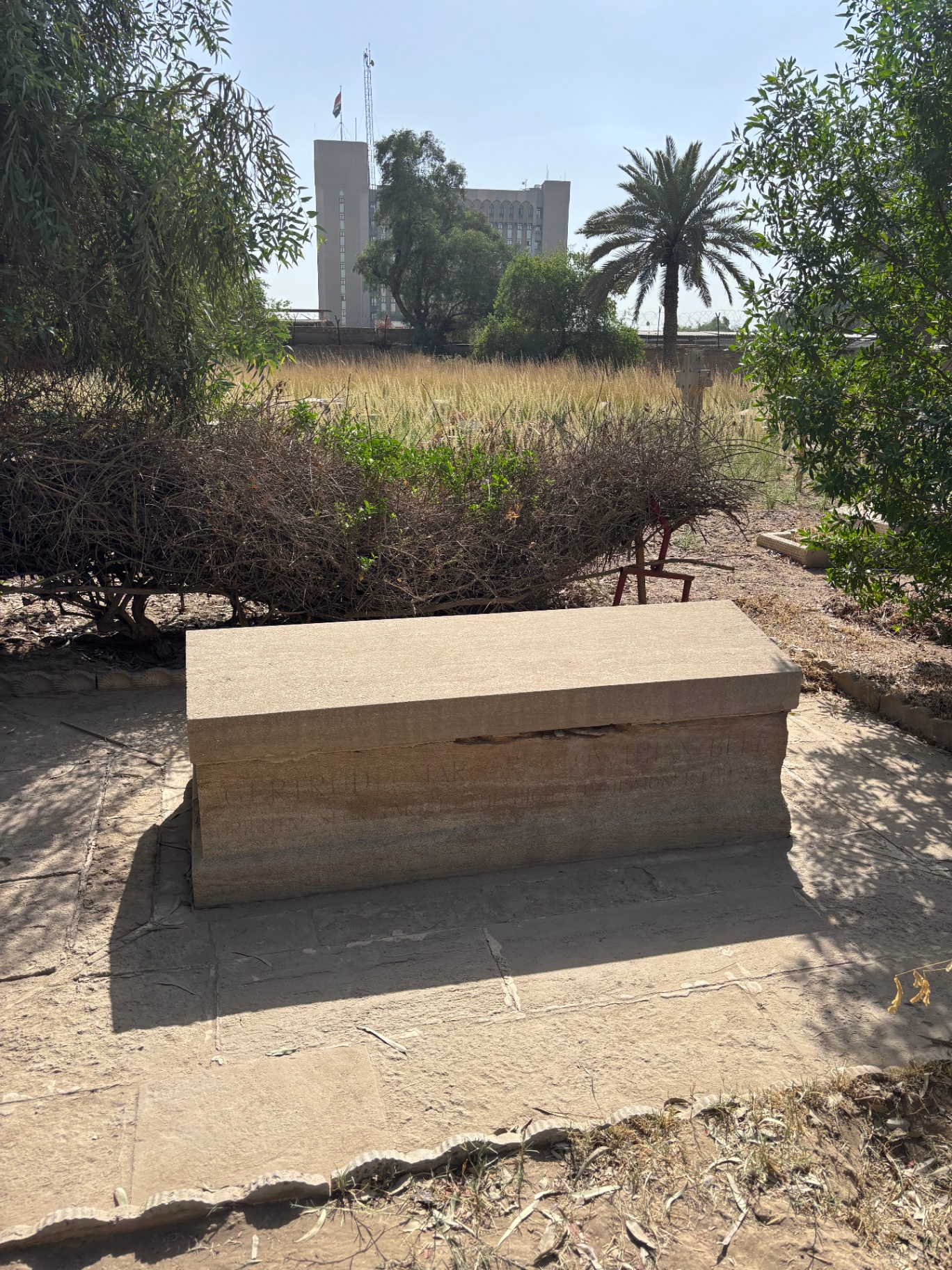
British Civil Cemetery Baghdad (not a CWGC site)
Take a Video Tour
A short video walkthrough of the British Civil Cemetery.
A civil cemetery for British nationals and not strictly a military war-grave site. It includes the grave of Gertrude Margaret Lowthian Bell, and other British civilians who lived and worked in Iraq under the mandate or colonial administration.
Quick Information
Battaween (Batūwīn) district of Baghdad, near the Iraqi Ministry of Education
Commemorated
0 commemorated
WWI: 0 • WWII: 0
A civil cemetery for British nationals and not strictly a military war-grave site. Includes British civil servants, administrators, expatriates from other countries, and Christian Iraqis.
Status
Last Updated
25 October 2025
The British Civil Cemetery in Baghdad is situated in the Battaween (or Batūwīn) district, near the Iraqi Ministry of Education. Unlike the military cemeteries managed by the Commonwealth War Graves Commission, this is a civil cemetery for British nationals.
It includes British civil servants, administrators, and expatriates from other countries in Iraq during the mandate era and earlier colonial presence, as well as Christian Iraqis. The cemetery is most notable for containing the grave of Gertrude Margaret Lowthian Bell, the influential archaeologist, writer, and political officer who played a central role in shaping post-Ottoman Iraq.
The cemetery has been neglected and poorly maintained for decades. Access is via agreement of the guardians who hold the key to the gate and can normally be found in the small tea shop to the left of the gate.
Current Condition
The cemetery has been neglected and poorly maintained for decades. Access is via agreement of the guardians who hold the key to the gate and can normally be found in the small tea shop to the left of the gate.
Some renovation work to Gertrude Bell's grave includes a new top stone but the underlying stone is weathered and the inscription on one side unreadable. There is a small brass plaque as well. Gertrude Bell's grave is said to be the responsibility of the University of Durham which holds her archive. A responsibility they have so far failed to honour.
Notable Casualties
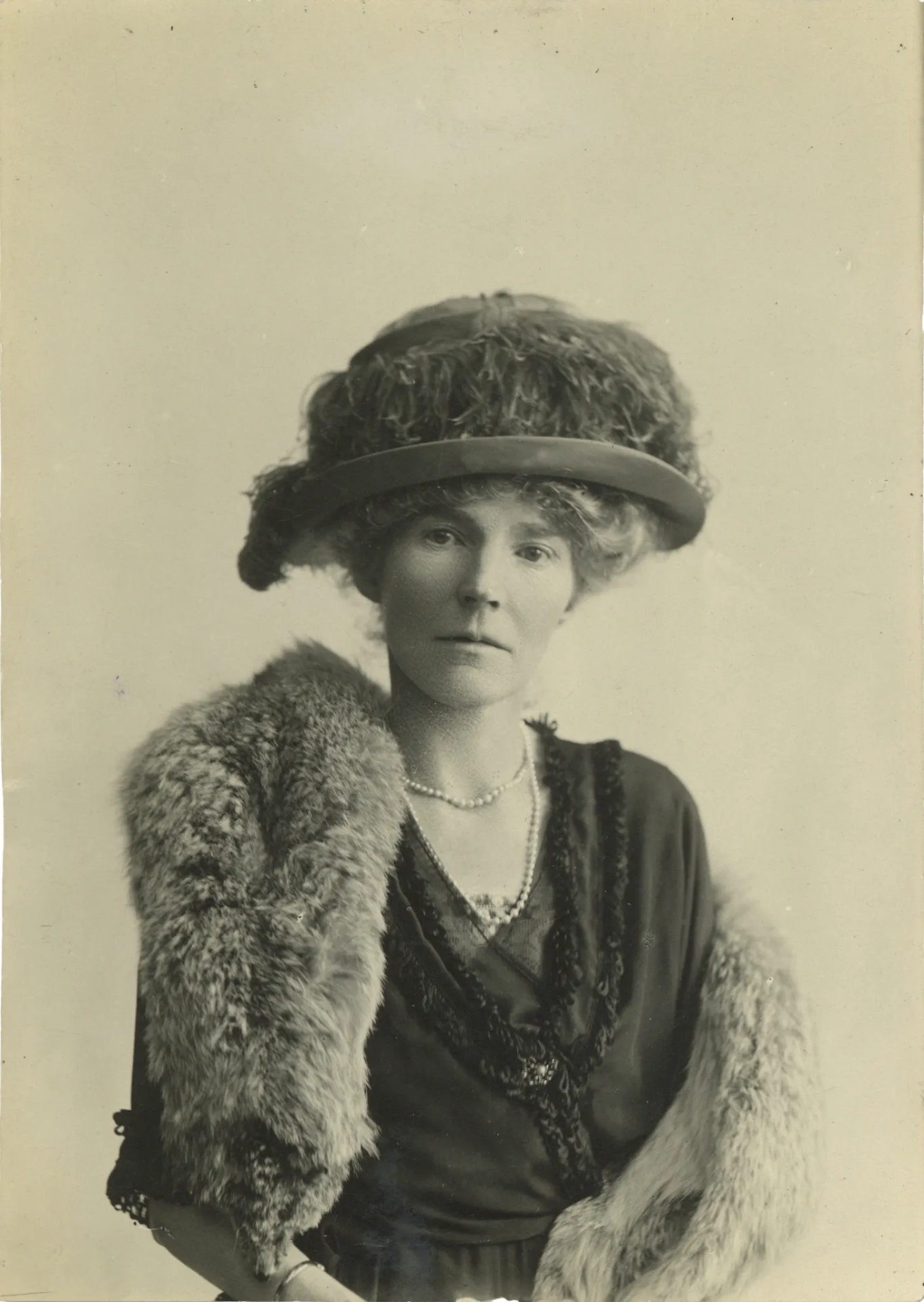
Gertrude Margaret Lowthian Bell
A British archaeologist, traveller, writer and political officer, Bell played a central role in shaping post-Ottoman Iraq: helping to draw the boundaries of Iraq, organizing the monarchy under King Faisal I, and founding the Iraqi National Museum and Library. She died in Baghdad on 12 July 1926, of what is commonly described as an overdose of sleeping pills (possibly accidental or suicide). King Faisal arranged a military funeral for her, and she was interred in the British Civil Cemetery in Baghdad. Bell remains a polarising but respected figure: loved by some Iraqis (she learnt Arabic, engaged with local elites) and critiqued by historians as an imperial actor.
Died in Baghdad, 12 July 1926, of what is commonly described as an overdose of sleeping pills (possibly accidental or suicide).
George A. Bust
British engineer who contributed expertise to Iraq's flour mills. His grave lies next to Bell's. His wife, an Iraqi Muslim woman, still reportedly visits his grave.
Died 1990. British engineer who worked on Iraq's flour mills.
Lieut-Commander Charles Henry Cowley, VC
Lieutenant-Commander, Royal Naval Volunteer Reserve
Co-led the SS Julnar attempt to resupply besieged Kut on 24/25 April 1916. He is also recorded as commemorated on the Basra Memorial (Panel 1). Memorial at this cemetery.
Died attempting to resupply besieged Kut, 24/25 April 1916.
Charles Frederick Brissel
U.S. Consul in Baghdad, died of cholera in 1916.
Died of cholera in Baghdad, 1916.
Wadie Elias Haddad
A Palestinian revolutionary and co-founder of the Popular Front for the Liberation of Palestine (PFLP). He was born in Safed, Palestine in 1927, and later studied medicine at the American University of Beirut, where he became politically active. Haddad was a leading member of the Arab Nationalist Movement before helping to establish the PFLP in 1967 after the Arab defeat in the Six-Day War. Within the PFLP, Haddad was responsible for external operations, organizing several international militant actions aimed at drawing attention to the Palestinian cause. His methods were controversial and made him one of the most well-known—and secretive—figures in the Palestinian resistance movement. As a Christian, he was buried in the British Civil Cemetery in Baghdad where he was honored as a symbol of Palestinian resistance.
Died in 1978 in East Germany (then the GDR) under mysterious circumstances, reportedly after being poisoned by Israeli intelligence (Mossad). His body was later buried in Iraq.
Visual Documentation
Admin upload portal for panoramas, videos and photos.
Video Photography
Video Documentation Coming Soon
Comprehensive video documentation of the memorial is being prepared and will be added shortly.
360° Panoramic Views
360° Panoramas Coming Soon
We’re preparing immersive 360° views. Once your panoramic files are ready, we’ll publish them here.
Watch the films from this site
Each film recorded at this location has its own page with the full footage, background notes and links to the surrounding cemeteries.

Planning a visit: quick answers
- Can you visit Commonwealth war cemeteries in Iraq?
- Yes. Basra War Cemetery, the Basra Memorial to the Missing, Amara War Cemetery and Baghdad North Gate War Cemetery can all be visited, but access varies by site and usually needs advance arrangement, a local guide and, in some cases, permission from the authorities.
- Do I need a visa or permits to visit?
- Most visitors now travel on a visa on arrival or an e-visa, and some sites sit inside restricted or military-controlled areas where a separate permit or escort is required.
- Are the cemeteries maintained?
- Condition varies considerably. Some sites are cared for by local gardeners, while others remain damaged or overgrown, as documented in our field reporting.